

Oiseau
Han Kang, Julie Deliquet, Isabelle Huppert and Hyeyoung Lee
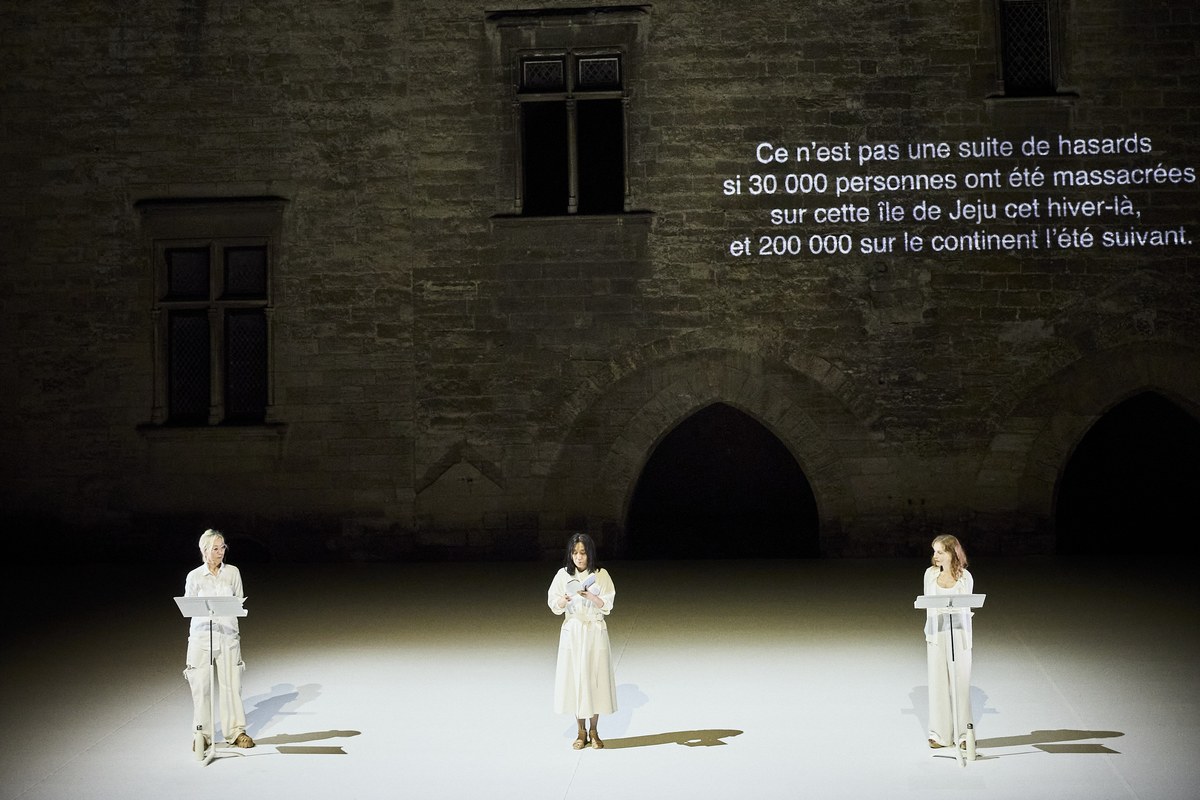
© Christophe Raynaud de Lage_Festival d'Avignon
- Director Julie Deliquet
- Based on the novel We Do Not Part
- Genre Reading Performance
- Date 10.10.Sat 7:30pm 10.11.Sun 5pm
- Language Korean, French
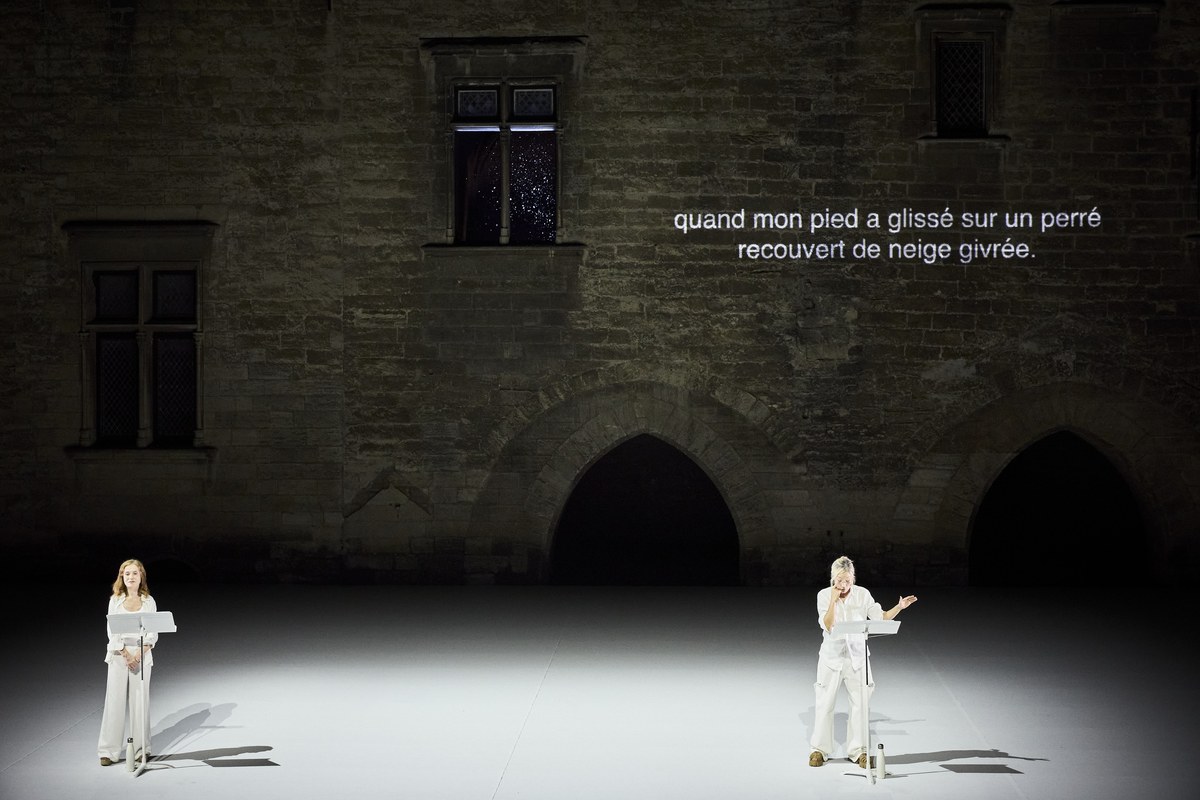
- Accessibility Korean Subtitles, French Subtitles, English Subtitles
- Rating 16 and above
- Venue Sogang University Mary Hall
- Duration 90 min.
- Premiere 2026 Avignon Festival, France
- Tickets 70,000 won
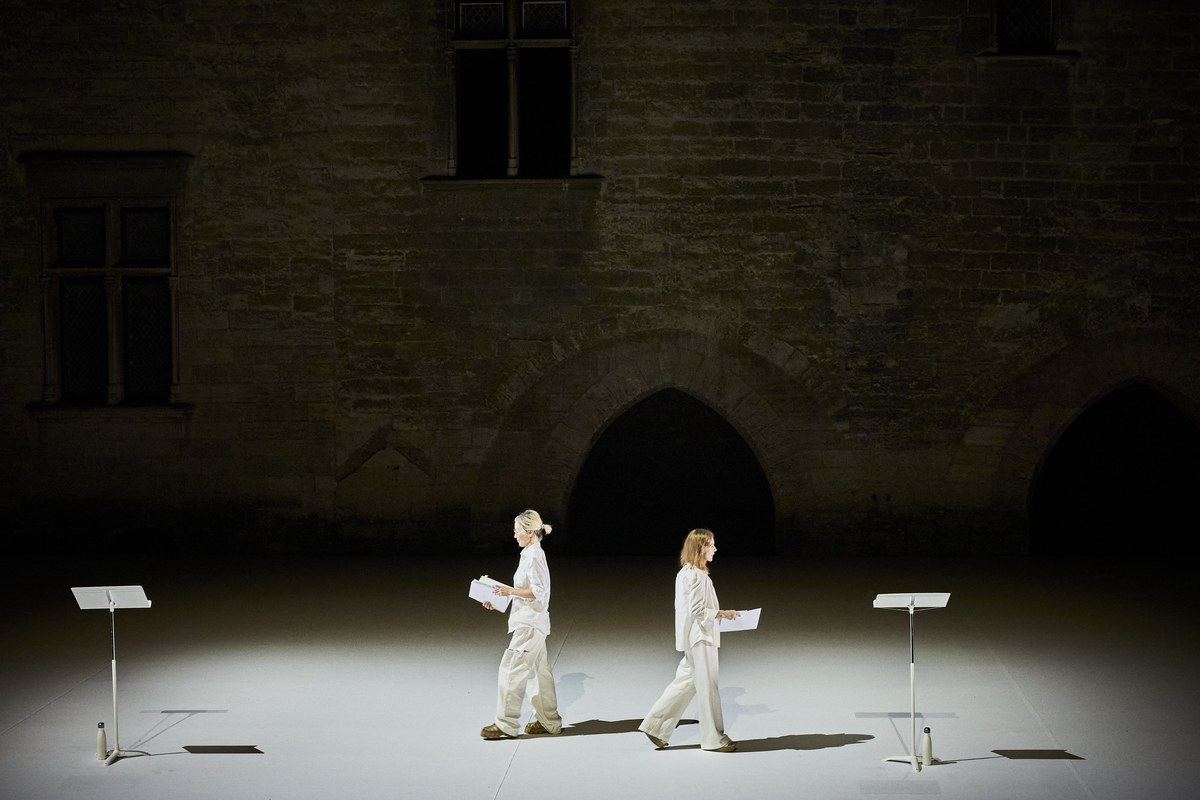
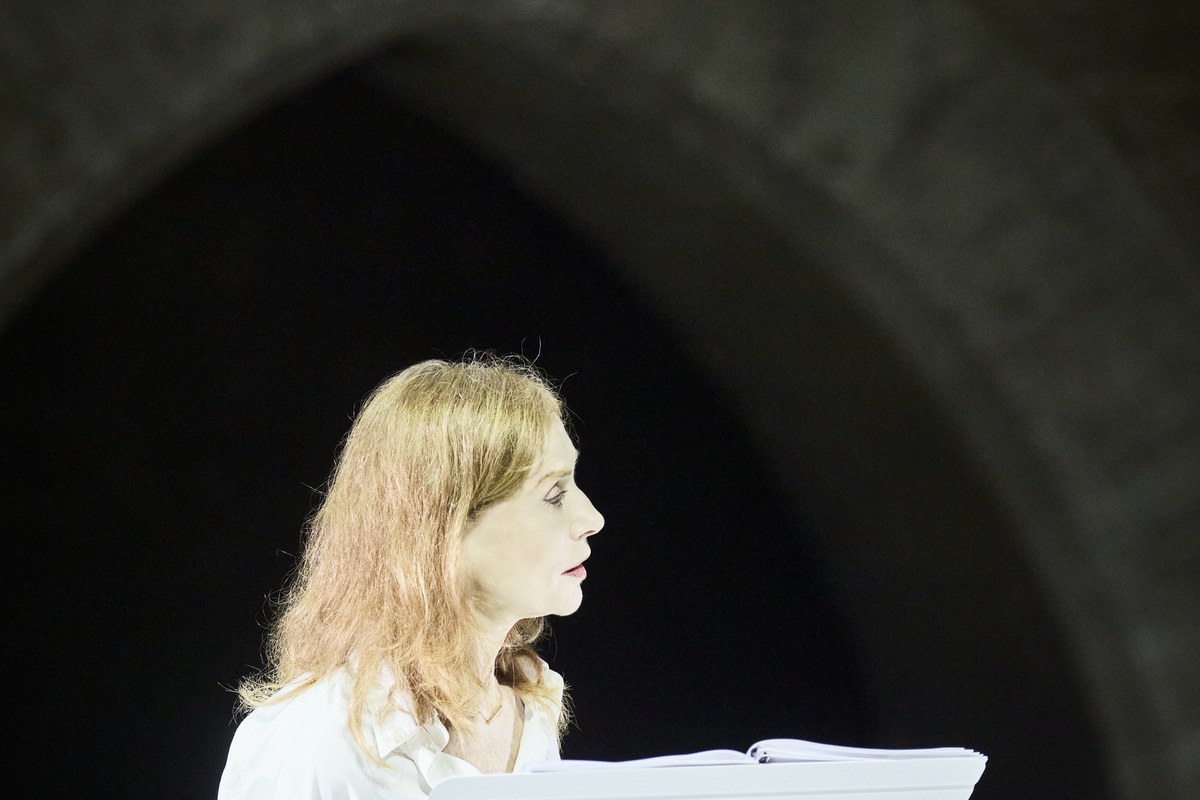
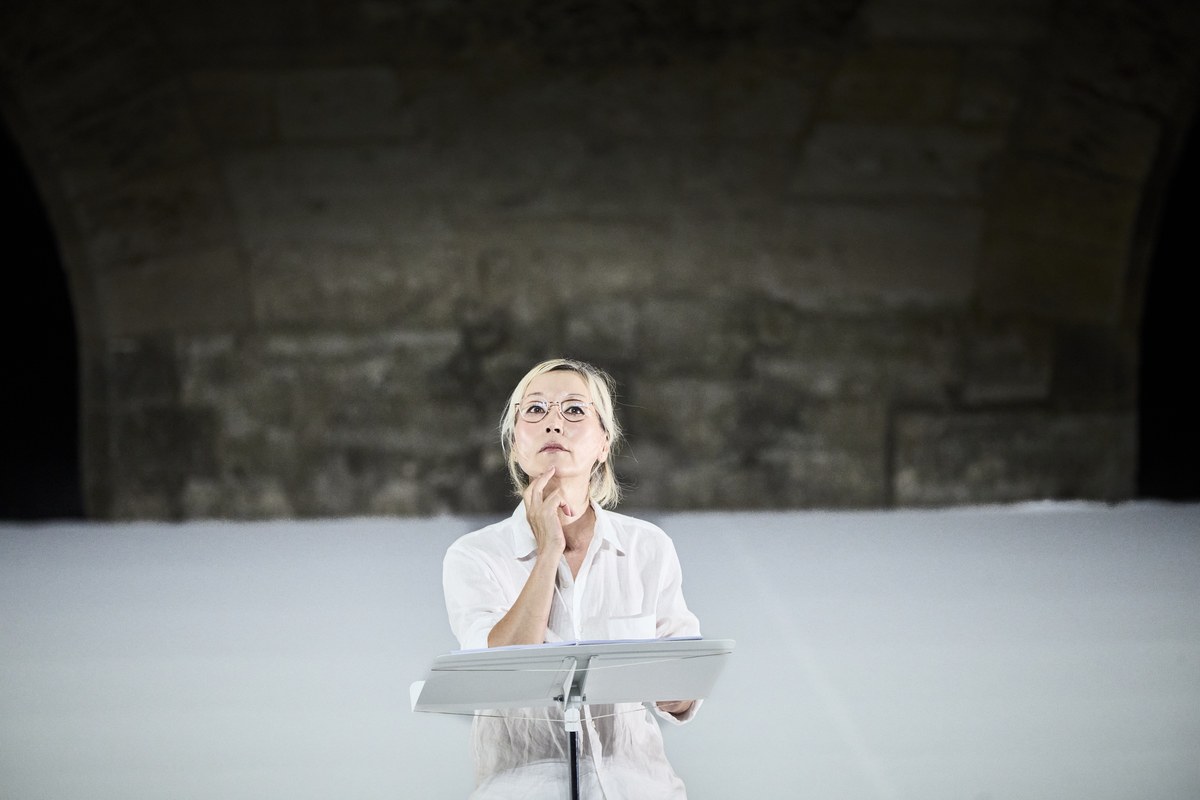
At the Cour d’honneur, Julie Deliquet presents a staged reading of Han Kang’s We Do Not Part, featuring Isabelle Huppert and Hyeyoung Lee. Two languages, two performers, one text.
Introduction
Julie Deliquet presents a lecture-performance of the first chapter <Oiseau> of <We Do Not Part>, a novel in which the author and Nobel Prize in Literature laureate Han Kang attempts, through fiction, to approach the tragedy of the Jeju uprising in the Republic of Korea.
One morning, Gyeongha receives a message from her friend Inseon, who lives on Jeju Island. Hospitalised on the mainland, she asks her to go to the island to feed the small white budgerigar she left at her home. Caught in a snowstorm, Gyeongha discovers upon her arrival how Inseon’s family history intertwines with one of the worst massacres in Korean history.
Actresses Isabelle Huppert and Hyeyoung Lee give voice to this memorial text, revealing the recurring motifs that run through Han Kang’s work: the traumas of history, the fragility of being, an absolute belief in life…
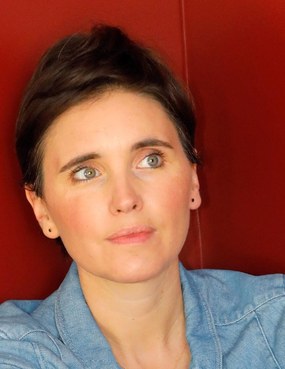
Julie Deliquet
Director Julie Deliquet, founder of the In Vitro collective, creates plays inspired by cinema: an adaptation of Ingmar Bergman’s <Fanny and Alexander> at the Comédie-Française in 2019; <A Christmas Tale>, based on the Arnaud Desplechin film, also in 2019; <Eight Hours Don’t Make a Day>, based on Rainer Werner Fassbinder’s series, in 2021; and <Welfare> in 2023, based on Frederick Wiseman’s documentary.
In 2025, she adapted Nobel Prize recipient Svetlana Alexievitch’s <The Unwomanly Face of War>. Appointed head of the Théâtre Gérard Philipe in 2020, she took over as director of the Théâtre national de la Colline in March 2026.
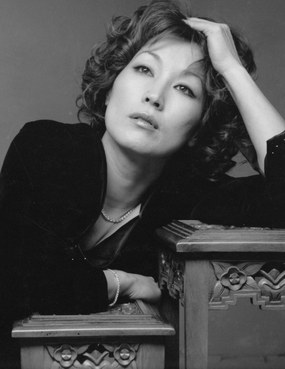
Hyeyoung Lee
A towering figure in Korean film and theater, Lee Hye-young has commanded the stage and screen with peerless presence and artistic gravity since her debut in the 1981 musical The Sound of Music.
Her mastery of the stage was firmly established early on, earning her the prestigious Dong-A Theater Award three times for Hymn of Death (1988), The Problematic Human, Yeonsan (1995), and Hedda Gabler (2012). On screen, her performance in Hong Sang-soo’s In Front of Your Face (2021) brought her Best Actress honors from the International Cinephile Society, the Busan Film Critics Awards, and the Baeksang Arts Awards. Most recently, her transcendent role in The Old Woman with the Knife (2025) earned her Best Actress at the Korean Film Producers' Association Awards, the AoA (Ace of Arts) Awards, and the Seoul International Film Awards, alongside being named the 2025 Bechdelian of the Year. Marking a legendary milestone, her return to the Berlinale main competition in 2025 at the 75th Berlin International Film Festival—forty years after advancing to the 35th festival with The Blazing Sun (1985)—reaffirmed her enduring global acclaim.
Lee's career is equally defined by a fearless pursuit of cross-cultural artistic collaboration. Following her notable works with Romanian director Felix Alexa on The Seagull (2016) and Hungarian director Róbert Alföldi on Medea (2017), her collaboration with French director Julie Deliquet in Oiseau marks her third major international theatrical endeavor. Her early days in the public eye as the daughter of film director Lee Man-hee evolved, through unwavering self-definition, into the brilliant culmination of a towering figure in Korean film and theater history, anchored by many landmark credits including the musical Cabaret (1984), and the plays Antony and Cleopatra (1990) and the musical Jesus Christ Superstar (2000).
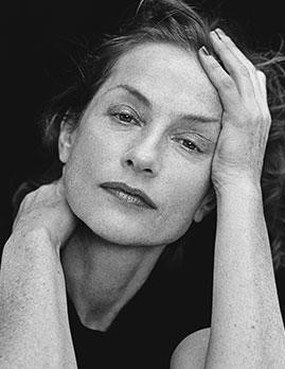
Isabelle Huppert
Prolific actress and a major figure of French cinema, Isabelle Huppert has won two awards at the Cannes Film Festival. She trained at the École de la Rue Blanche and later at the Conservatoire national supérieur d’art dramatique, notably under the guidance of Antoine Vitez.
On stage, she has worked with renowned directors including Peter Zadek on <Mesure pour Mesure> by Shakespeare (1991), and Robert Wilson on <Orlando> by Virginia Woolf (1993) and later <Quartett> by Heiner Müller (2006). In 2000, she appeared at the Festival d'Avignon in <Médée> by Euripides, directed by Jacques Lassalle and performed in the Cour d’honneur of the Palais des Papes. She returned to the stage in <4.48 Psychose> by Sarah Kane, directed by Claude Régy, in 2002.
She later starred in <Hedda Gabler> by Ibsen, directed by Éric Lacascade (2005), and in <Un tramway nommé désir> by Tennessee Williams, directed by Krzysztof Warlikowski, presented in 2010 at the Odéon-Théâtre de l'Europe. There, she also collaborated with Luc Bondy on <Les Fausses Confidences> by Marivaux. In 2021, she returned to the Cour d’honneur of the Palais des Papes in <La Cerisaie> by Chekhov, directed by Tiago Rodrigues.
- WithIsabelle Huppert, Hyeyoung Lee
- Based onthe novel <We Do Not Part>, published by Éditions Grasset et Fasquelle © Han Kang 2021
- TextHan Kang
- French translationKyungran Choi and Pierre Bisiou
- English translationE. Yaewon, Paige Aniyah Morris
- Reading direction and dramaturgyJulie Deliquet
- Dramaturgy and artistic collaborationAnnabelle Simon
- LightingVyara Stefanova
- SoundLucas Lelièvre
- ProductionFestival d'Avignon
- CollaborationSPAF – Seoul Performing Arts Festival
- Performances in partnership withFrance Médias Monde
- Surtitle OperationCho Hwayeon