

Oiseau
Han Kang, Julie Deliquet, Isabelle Huppert and Hyeyoung Lee
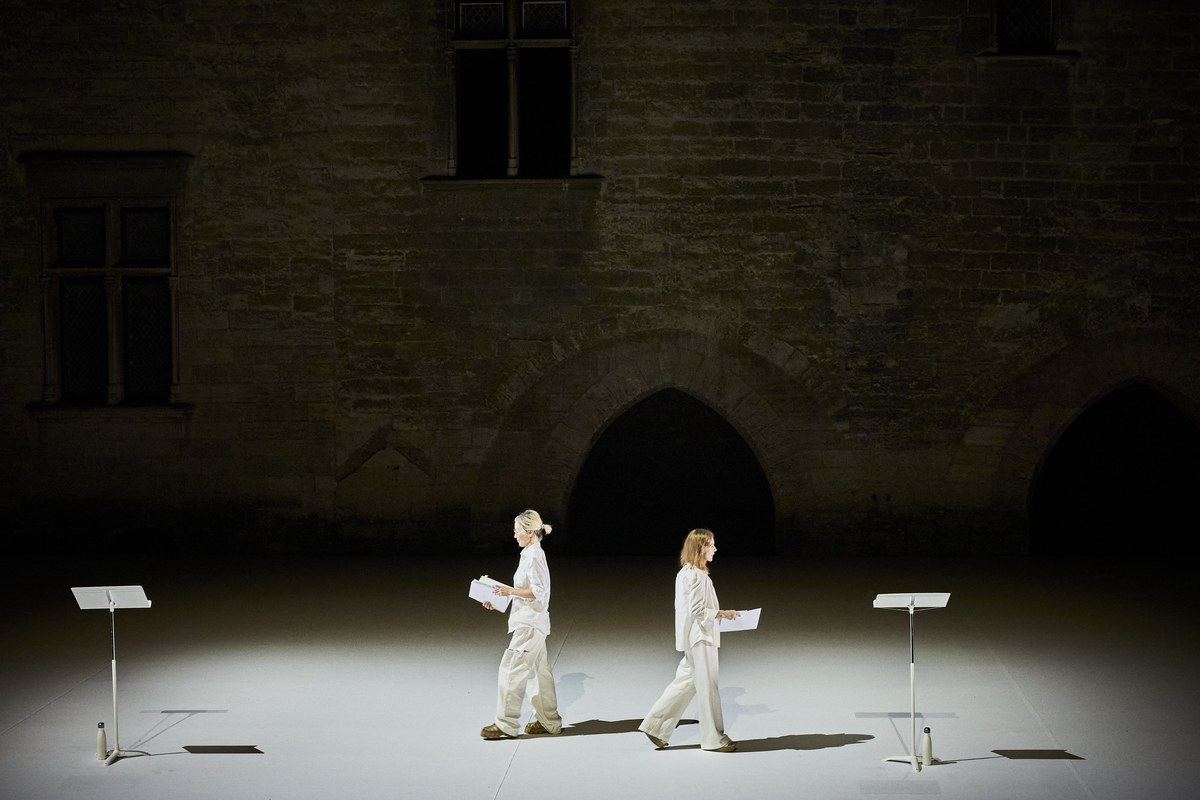
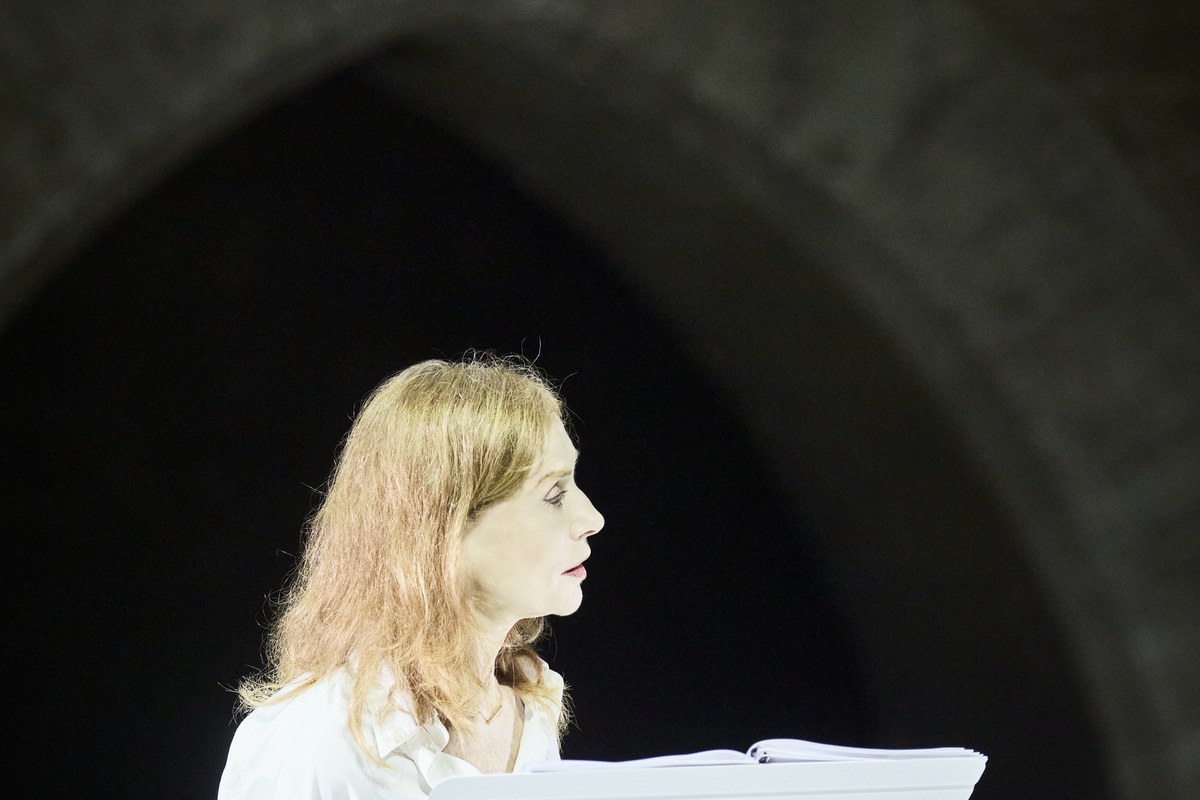
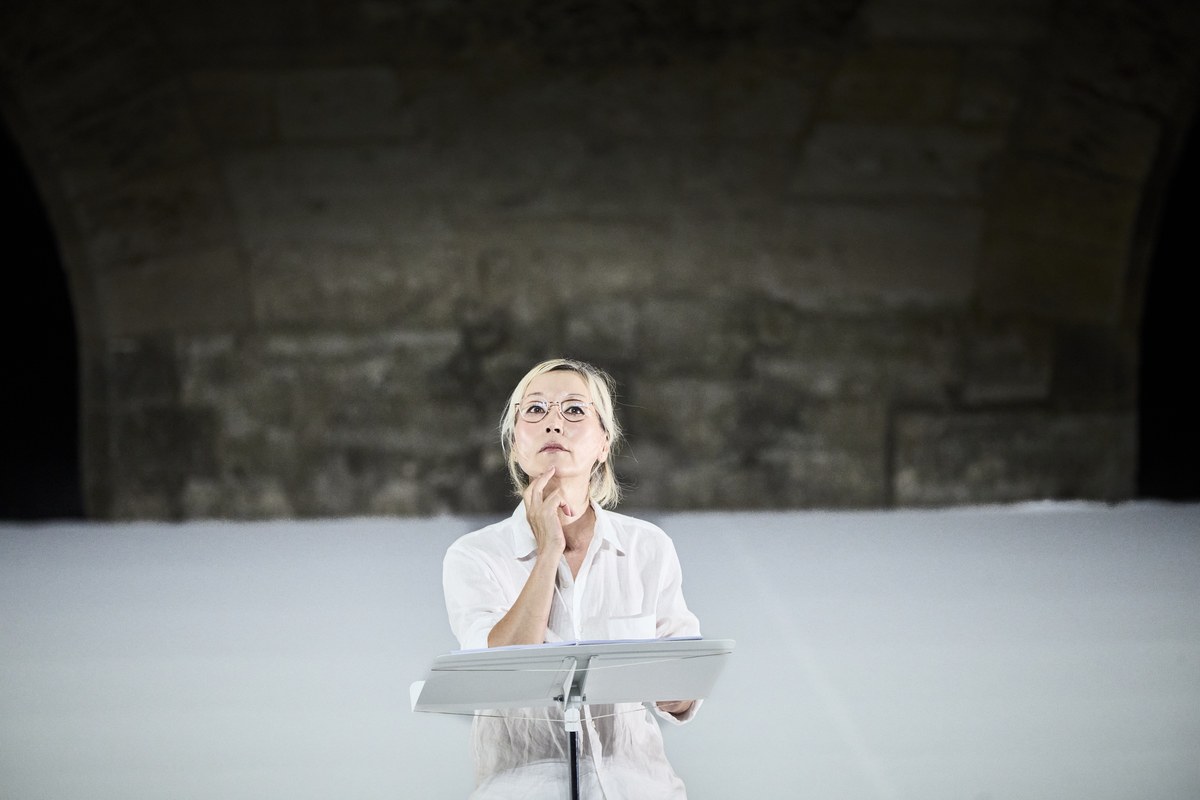
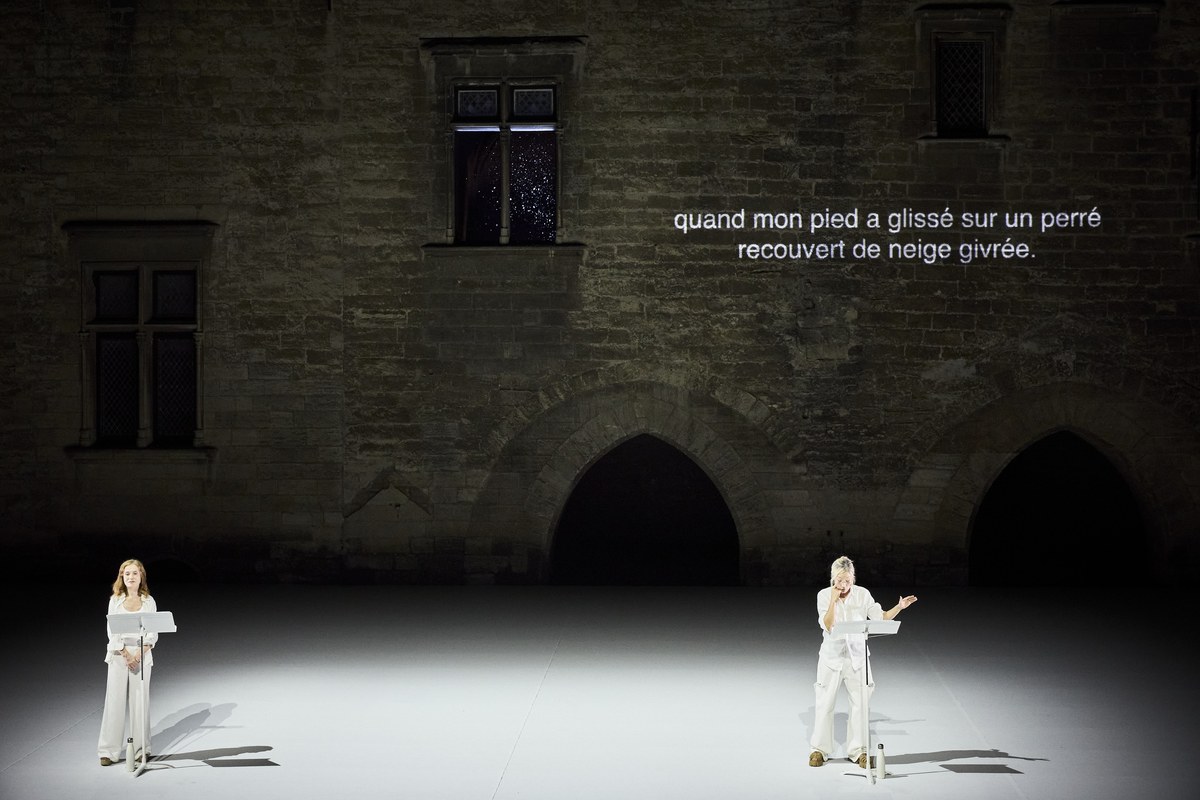
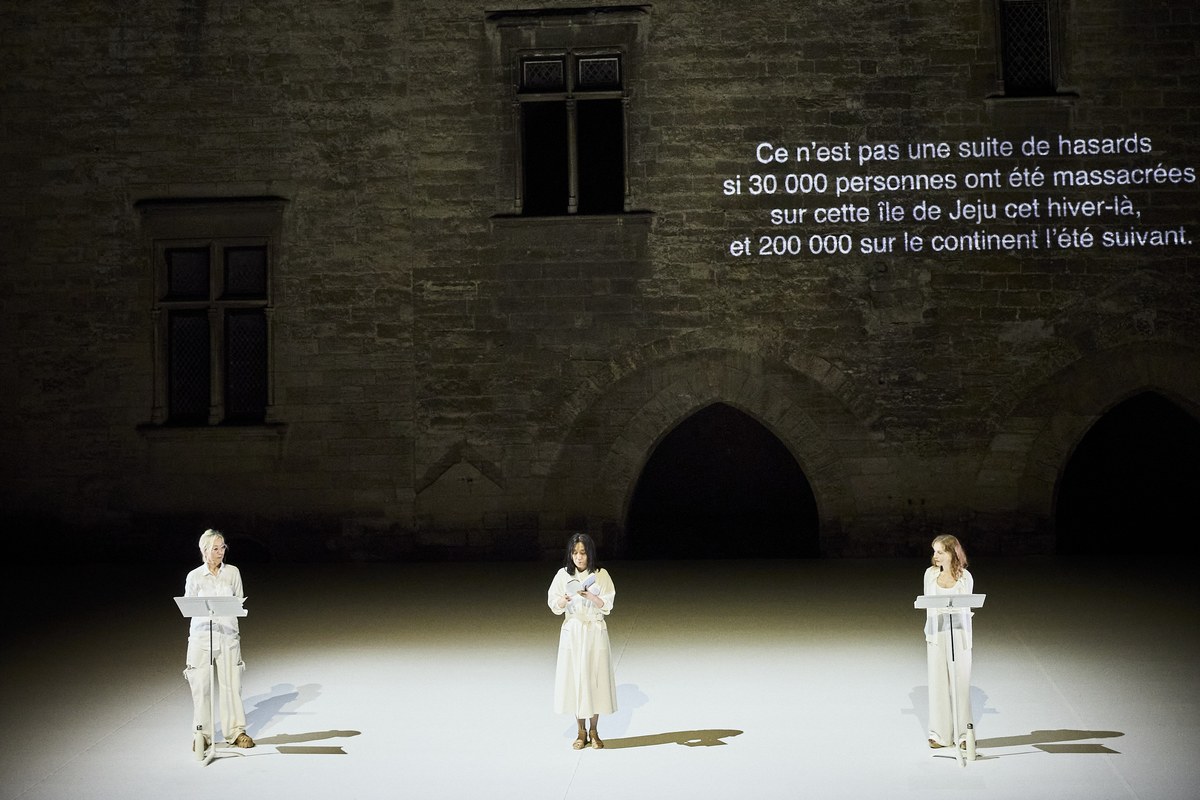
© Christophe Raynaud de Lage_Festival d'Avignon
- Director Julie Deliquet
- Genre Reading Performance
- Date 10.10.Sat 7:30pm 10.11.Sun 5pm
- Language Korean, French
- Accessibility Korean Subtitles, French Subtitles, English Subtitles
- Rating 16 and above
- Venue Sogang University Mary Hall
- Duration 90 min.
- Premiere 2026 Avignon Festival, France
- Tickets 70,000 won
Julie Deliquet presents a lecture-performance of the first chapter <Oiseau> of <We Do Not Part>, a novel in which the author and Nobel Prize in Literature laureate Han Kang attempts, through fiction, to approach the tragedy of the Jeju uprising in the Republic of Korea.
One morning, Gyeongha receives a message from her friend Inseon, who lives on Jeju Island. Hospitalised on the mainland, she asks her to go to the island to feed the small white budgerigar she left at her home. Caught in a snowstorm, Gyeongha discovers upon her arrival how Inseon’s family history intertwines with one of the worst massacres in Korean history.
Actresses Isabelle Huppert and Hyeyoung Lee give voice to this memorial text, revealing the recurring motifs that run through Han Kang’s work: the traumas of history, the fragility of being, an absolute belief in life…
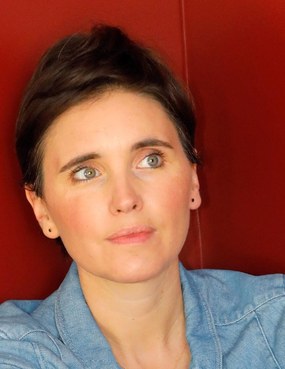
Julie Deliquet
Director Julie Deliquet, founder of the In Vitro collective, creates plays inspired by cinema: an adaptation of Ingmar Bergman’s <Fanny and Alexander> at the Comédie-Française in 2019; <A Christmas Tale>, based on the Arnaud Desplechin film, also in 2019; <Eight Hours Don’t Make a Day>, based on Rainer Werner Fassbinder’s series, in 2021; and <Welfare> in 2023, based on Frederick Wiseman’s documentary.
In 2025, she adapted Nobel Prize recipient Svetlana Alexievitch’s <The Unwomanly Face of War>. Appointed head of the Théâtre Gérard Philipe in 2020, she took over as director of the Théâtre national de la Colline in March 2026.
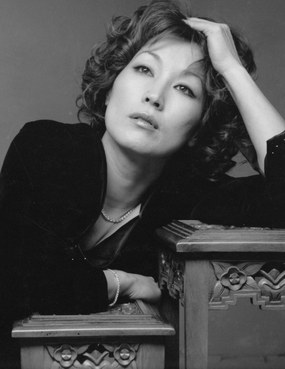
Hyeyoung Lee
South Korean actress Lee Hye-young made her debut in the musical <The Sound of Music>(1981). She went on to appear in <The Blazing Sun>(1985), <Winter Wanderer>(1986), <Ticket>(1986), <The Age of Success>(1988), <North Korean Partisan in South Korea>(1990), <Fly High Run Far>(1991), <Hwaomkyung>(1993), and <No Blood No Tears>(2002).
She has also appeared in the Korean television dramas <I'm Sorry, I Love You>(2004), <Fashion 70's>(2005), and <Boys Over Flowers>(2009). More recently, she has continued her acclaimed collaboration with Hong Sang-soo in <In Front of Your Face>(2021), <The Novelist's Film>(2022), <Walk Up>(2022), and <A Traveler's Needs>(2024).
In 2025, she received critical acclaim for reprising the title role in the National Theater Company of Korea's production of <Hedda Gabler>, returning to the role for the first time in thirteen years. Moving seamlessly between film and the stage, Lee continues to establish herself as one of Korea's most distinguished actors.
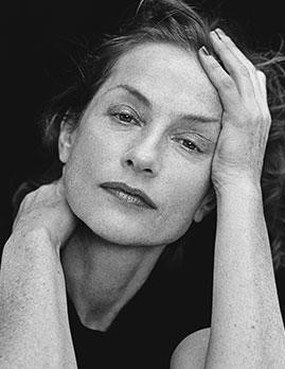
Isabelle Huppert
Prolific actress and a major figure of French cinema, Isabelle Huppert has won two awards at the Cannes Film Festival. She trained at the École de la Rue Blanche and later at the Conservatoire national supérieur d’art dramatique, notably under the guidance of Antoine Vitez.
On stage, she has worked with renowned directors including Peter Zadek on <Mesure pour Mesure> by Shakespeare (1991), and Robert Wilson on <Orlando> by Virginia Woolf (1993) and later <Quartett> by Heiner Müller (2006). In 2000, she appeared at the Festival d'Avignon in <Médée> by Euripides, directed by Jacques Lassalle and performed in the Cour d’honneur of the Palais des Papes. She returned to the stage in <4.48 Psychose> by Sarah Kane, directed by Claude Régy, in 2002.
She later starred in <Hedda Gabler> by Ibsen, directed by Éric Lacascade (2005), and in <Un tramway nommé désir> by Tennessee Williams, directed by Krzysztof Warlikowski, presented in 2010 at the Odéon-Théâtre de l'Europe. There, she also collaborated with Luc Bondy on <Les Fausses Confidences> by Marivaux. In 2021, she returned to the Cour d’honneur of the Palais des Papes in <La Cerisaie> by Chekhov, directed by Tiago Rodrigues.
- WithIsabelle Huppert, Hyeyoung Lee
- Based onthe novel <We Do Not Part>, published by Éditions Grasset et Fasquelle © Han Kang 2021
- TextHan Kang
- French translationKyungran Choi and Pierre Bisiou
- English translationE. Yaewon, Paige Aniyah Morris
- Reading direction and dramaturgyJulie Deliquet
- Dramaturgy and artistic collaborationAnnabelle Simon
- LightingVyara Stefanova
- SoundLucas Lelièvre
- Make up, hairdresserSylvie Cailler, Jocelyne Milazzo
- ProductionFestival d'Avignon
- CollaborationSPAF – Seoul Performing Arts Festival
- Performances in partnership withFrance Médias Monde