

Soapéra, an installation
Mathilde Monnier
ⓒ Haruka Oka. Courtesy of Kyoto Experiment
- Conception Mathilde Monnier, Dominique Figarella
- Genre Dance
- Date 10.9.Fri 5pm 10.10.Sat 5pm
- Accessibility Non-verbal
- Rating 8 and above
- Venue National Theater of Korea Haneul Round Theater
- Duration 45 min.
- Premiere 2010 Centre Pompidou Paris, France
- Tickets 50,000 won
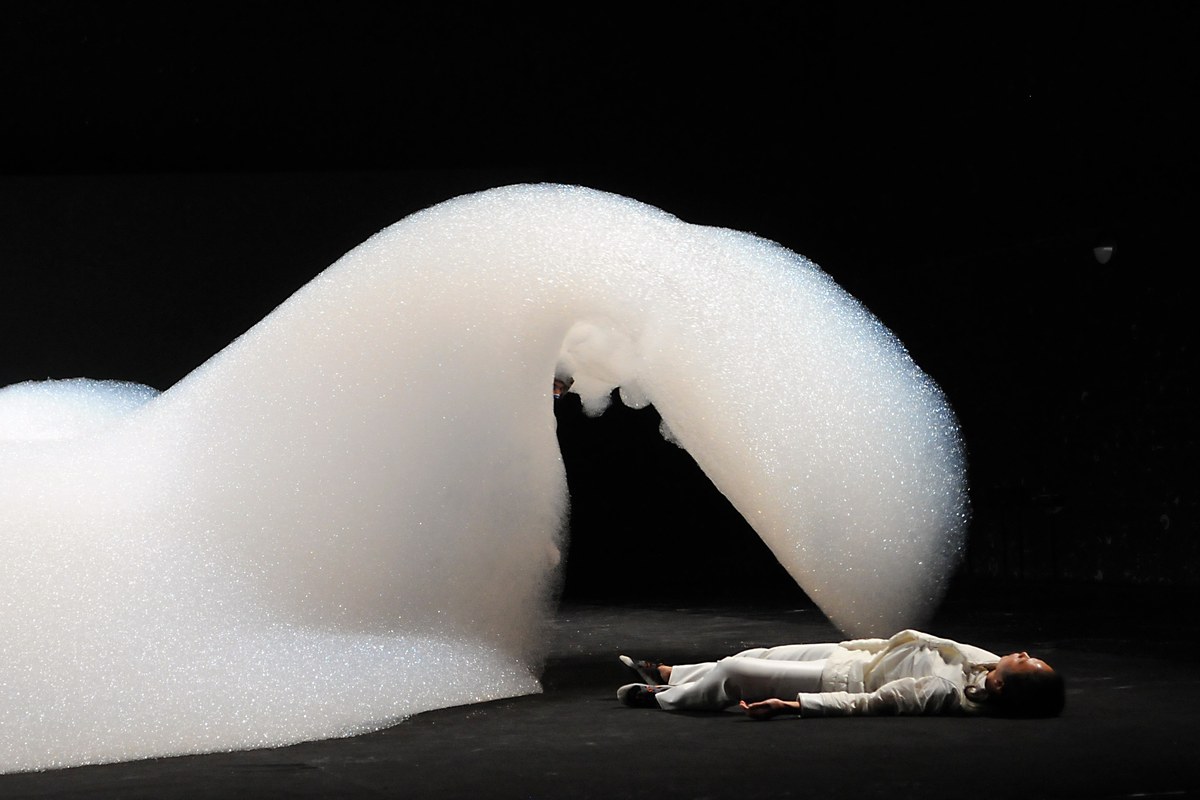
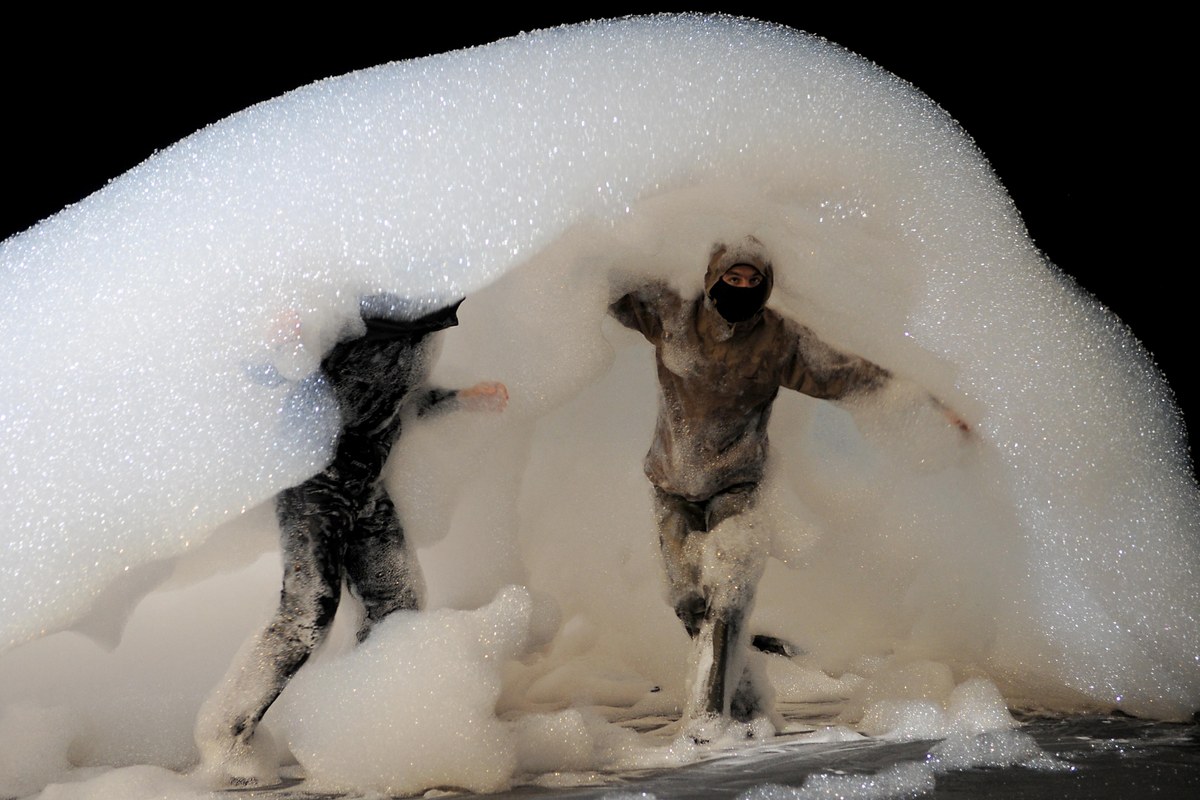
<Soapéra> is a performative and visual installation based on the use of ephemeral materials such as soap bubbles.
The first image presented to the audience is that of an unblemished, pristine white world that takes shape before our eyes and occupies the entire stage. An immaterial cosmic space where a form more commonly known as that of a virgin breast, these forms are the beginning of a world, and perhaps even the idea of the origin of the world, immaterial and gaseous…
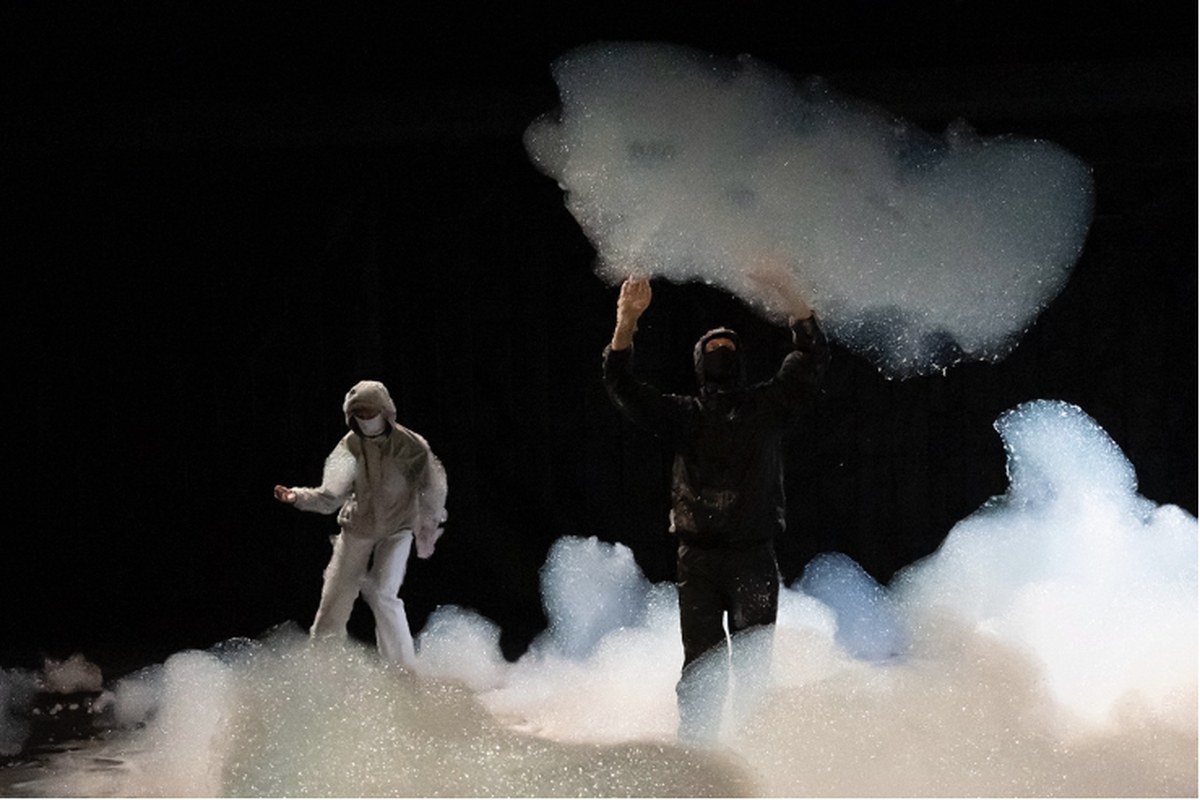
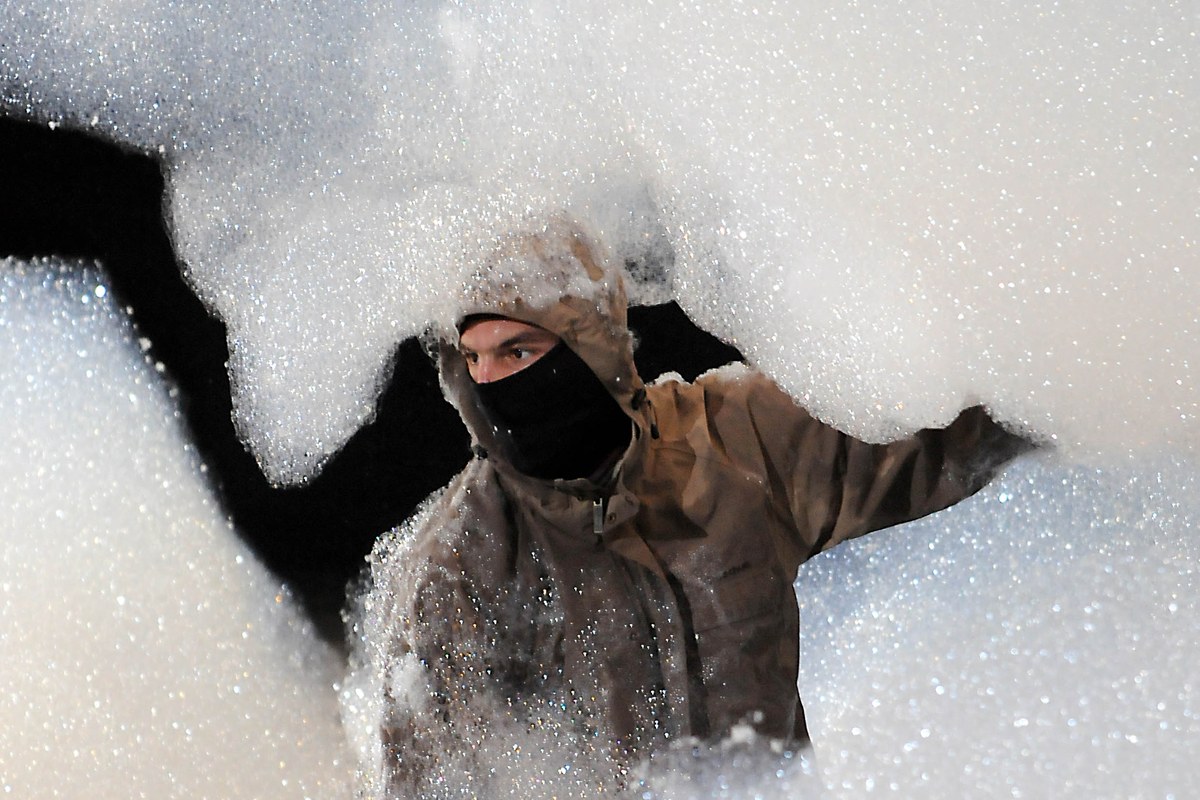
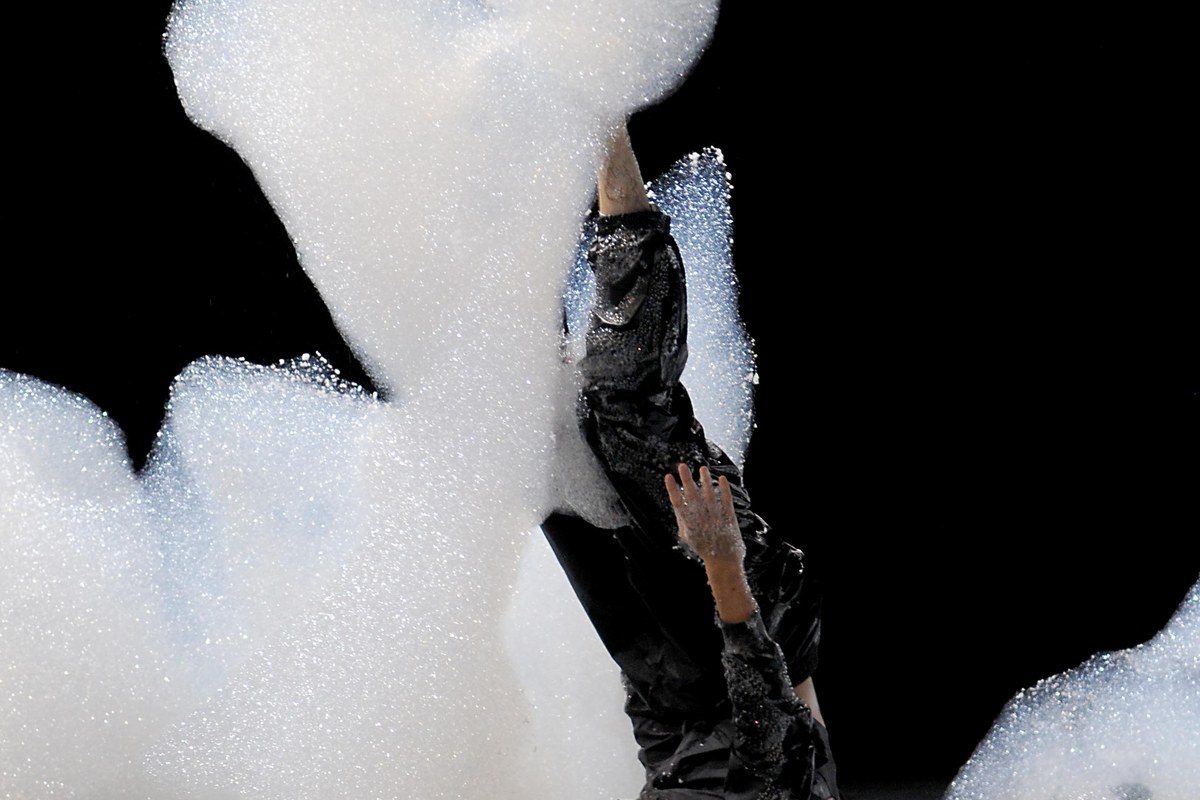
The dancers gradually activate this perfect form and bring forth ephemeral shapes, like chimeras or phantasmagorias that create imaginary creatures, monsters, apparitions, angels, demons, and ghosts. Foam sculptures appear and disappear, immersed in a space-time that could be another planet, perhaps the moon. The piece refers to unknown planets where the air has become fluid and tangible, something you can touch… touch the air!
<Soapéra> takes place in a contemplative and fascinating moment where foam becomes a plastic object manipulated by the dancers. <Soapéra> gradually evolves as the foam disappears, giving way to a mesmerizing dance. This magnificent world is gradually evolving into a more complex one where moss becomes a real contemporary space, a kind of landscape polluted and tainted by humans.
This installation is a poetic and dance meditation. This version is very different from the original show; it is a new form, more radical, more accomplished, which is very contemplative and fascinating in its relationship to time. The foam is a partner in the performance, a central actor in the installation, and the plastic dimension gives it a more contemporary, ghostly, pareidolic feel, allowing us to see ephemeral plastic forms in the convolutions of the foam. The dancers are connected to each other by this membrane and take us on a journey outside of time.
ⓒ Luca Ianelli
Mathilde Monnier
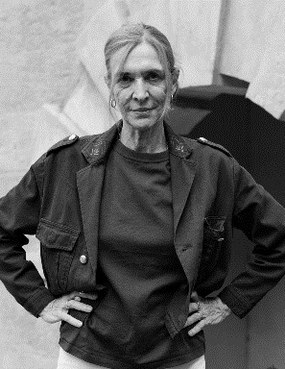
Mathilde Monnier occupies an important place in the landscape of contemporary dance. As a choreographer and former director of the Centre National de la Danse in Paris, she has created over 50 choreographic pieces which have been performed on the greatest international stages, from the Festival d’Avignon to the Théâtre de la Ville in Paris, and from New York to Vienna, Berlin, and London.
She has also received many awards for her work (Prix ministère de la Culture, Grand Prix SACD, Prix Meilleur Spectacle 2023 for <Black Lights>). Since 2020, her company has been in residence at the Halle Tropisme in Montpellier.
Dominique Figarella
Dominique Figarella is a French artist. He teaches at the École des Beaux-Arts in Paris. A graduate of Villa Arson, his works are regularly exhibited in France, Europe, and the United States.
He has participated in several group exhibitions in France and Europe and has held solo exhibitions in several cities across France. From 2022 to 2024, his works were exhibited at the Espace d’Art Concret in Mouans-Sartoux, then in the exhibition <Des corps, des écritures> at the Musée d’Art Moderne in Paris (curated by Odile Burluraux and Anne Dressen), at the Museum of Modern Art in Céret, and most recently in the exhibition <Désordre> from the Antoine de Galbert Collection at the Museum of Contemporary Art (MAC) in Lyon.
His work is regularly exhibited at the Galerie Anne Barrault in Paris. His most recent solo exhibition opened there in March 2024.
- ConceptionMathilde Monnier & Dominique Figarella
- ChoreographyMathilde Monnier
- Visual artDominique Figarella
- DanceYoann Demichelis, Julien Gallée-Ferré, Thiago Granato, Jonathan Pranlas
- Stage collaborationAnnie Tolleter
- SoundOlivier Renouf
- Light designÉric Wurtz
- Costume realizationLaurence Alquier
- Coproduction – Soapéra, an installationCentre Pompidou - Les Spectacles Vivants / Centre Chorégraphique National de Montpellier Languedoc-Roussillon
- Coproduction – Soapéra (theater version)Festival Montpellier Danse 2010 / Centre Pompidou - Les Spectacles Vivants / Festival d’Automne - Paris / Künstlerhaus Mousonturm Frankfurt et Tanzlabor_21 / Centre Chorégraphique National de Montpellier Languedoc-Roussillon
- SupportThe MM Company is supported by the DRAC Occitanie. Dominique Figarella’s piece realised in the frame of “la commande publique du ministère de la Culture et de la Communication” (direction générale de la création artistique / direction régionale des affaires culturelles du Languedoc-Roussillon).